
A vinyl wrap can sometimes be installed on a damaged car, but the surface underneath needs to be stable, reasonably smooth, and capable of supporting proper adhesion. Vinyl is a finishing and customization material, not a substitute for bodywork or paint repair.
The short answer: Minor cosmetic imperfections don’t always prevent a car from being wrapped. Peeling paint, active rust, significant dents, failing clear coat, and poorly repaired surfaces, however, often need to be addressed before vinyl goes on.
One thing we’ve learned from working with different vehicles is that appearance alone doesn’t tell us whether a car is ready for wrapping. Paint can look acceptable from several feet away while having weak clear coat, previous repair work, loose touch-up paint, or other issues that become obvious once the surface is cleaned and inspected closely.
That’s why at AllPro Wraps, we prefer evaluating the actual surface before recommending a wrap. For Raleigh owners, that inspection helps us determine whether the vehicle can move forward as it is, needs relatively minor preparation, or would benefit from paint or body repair first. Starting with the right surface gives the finished wrap a much better foundation.
What Types of Vehicle Damage Can Affect Vinyl Wrap Installation?
Any damage that changes surface smoothness, compromises paint stability, or interferes with adhesion can affect whether a vehicle is ready for wrapping. Some imperfections only require additional wrap surface preparation, while others should be repaired before installation.
The issues we pay particular attention to include:
- Rock chips and deep scratches: Sharp edges and missing paint can remain visible underneath automotive vinyl.
- Dents and creases: Film follows the shape of the panel, so distorted metal won’t become flat after wrapping.
- Peeling or flaking clear coat: Vinyl applied over an unstable finish is relying on a surface that may continue deteriorating.
- Rust and corrosion: Covering corrosion doesn’t stop it from developing underneath the material.
- Failing or poorly matched touch-up paint: Weak repairs can affect adhesion and potentially lift when the wrap is eventually removed.
- Previous body repairs and repainted panels: These aren’t automatically a problem, but the quality and condition of the previous work matter.
Not every defect calls for the same solution. A few small chips on otherwise healthy factory paint are very different from a bumper with peeling clear coat or a quarter panel with corrosion developing around an old repair.
A professional car wrap installation should account for those differences before any material is applied. With a vehicle wrap, the quality of the surface underneath is directly connected to how clean and consistent the finished result can look.
Will Vinyl Wrap Hide Scratches, Chips, and Dents?
Vinyl can make certain extremely minor cosmetic imperfections less noticeable, but scratches, chips, dents, and uneven repairs can still show through the material. Wrap film conforms closely to the existing surface rather than creating a new, perfectly smooth panel.
A light mark that doesn’t noticeably interrupt the paint surface may have little effect on the finished appearance. A deep scratch is different because the material can settle into that groove. The same principle applies to chipped paint, where missing material creates an uneven surface beneath the film.
Dents are even more straightforward. A vinyl wrap over dents follows the contour of the damaged panel, which means the dent is still there after installation. Different finishes and lighting may change how noticeable it appears, but the vinyl hasn’t corrected the metal.
This is why we don’t recommend choosing a vinyl wrap simply as a way to cover damage. When considering whether you can wrap over scratches or other imperfections, the important question is how much those defects alter the surface. Evaluating the car wrap paint condition first helps set realistic expectations and prevents a color change from turning into an expensive attempt to hide a problem it was never designed to repair.
Can You Wrap a Car With Peeling Paint or Clear Coat?
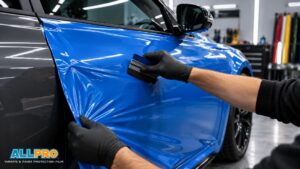
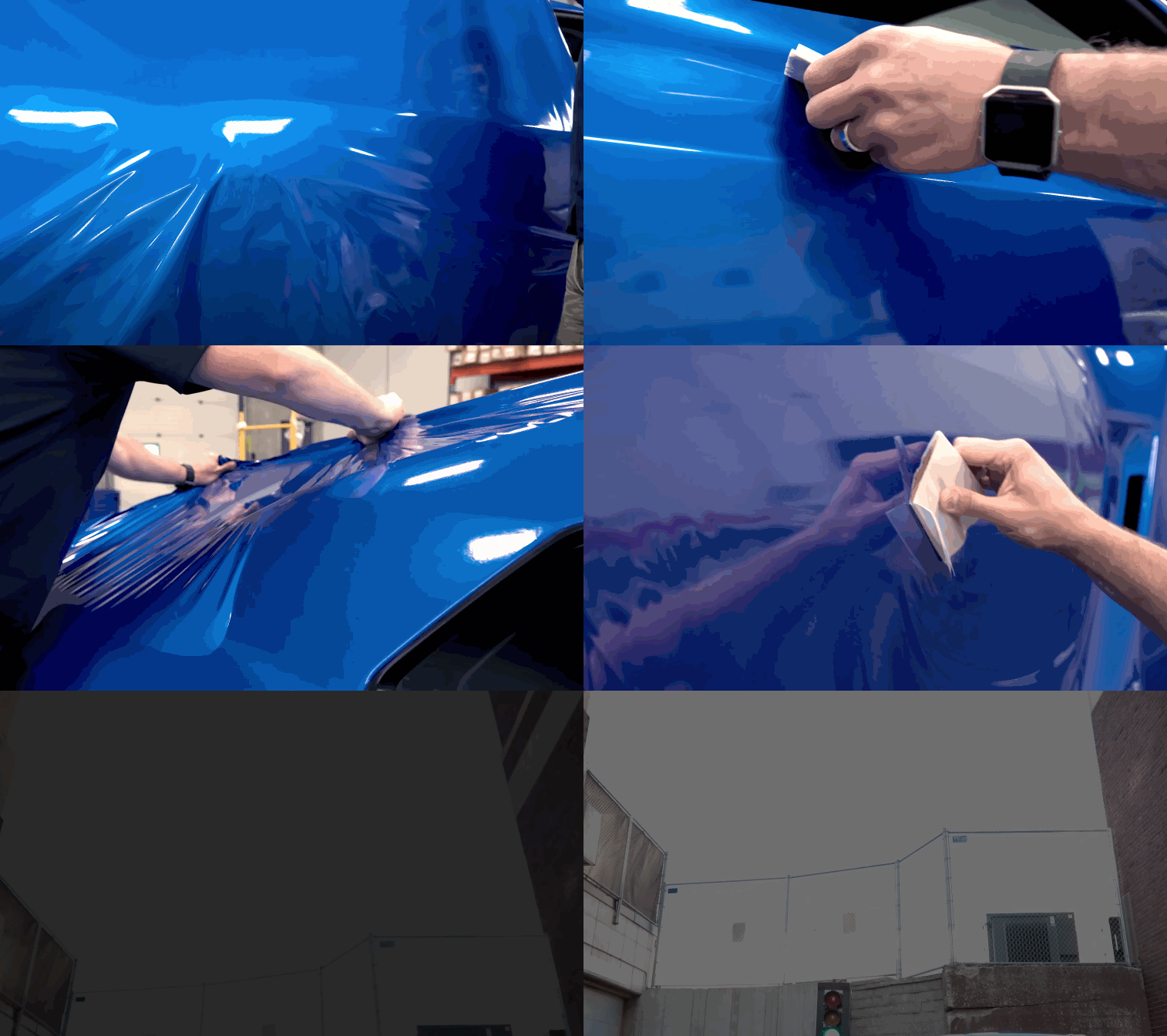 High gloss vinyl wrap delivers a sleek mirror like finish with precision installation.
Wrapping over peeling paint, failing clear coat, or another unstable finish is generally not recommended. Vinyl adhesive needs a sound surface beneath it, and even high-quality film can’t compensate for paint that is already separating from the vehicle.
Think of the bond as a chain. The vinyl adheres to the painted surface, but that bond is only useful when the paint itself remains securely attached to the panel. When a clear coat is flaking or paint is lifting, the film may technically stick to that material while the material underneath continues to fail.
That can create problems during both installation and removal. Loose areas may lift further as the film is positioned, and compromised paint can potentially come away with the vinyl when the wrap is removed later.
This doesn’t mean one tiny clear-coat imperfection automatically disqualifies an entire vehicle from vinyl wrapping services. The location, severity, and stability of the affected area all matter. Localized problems may have practical repair options, while widespread clear-coat failure can require substantially more work before wrapping makes sense.
Repairing an unstable finish first isn’t unnecessary preparation. It gives the vinyl a surface capable of supporting the installation and gives the owner a more realistic chance of getting the appearance expected from the wrap.
Can You Vinyl Wrap Over Rust?
Active rust should be repaired before vinyl is applied because covering corrosion doesn’t stop the deterioration underneath. A wrap may temporarily remove the rust from view, but it doesn’t treat the affected metal or restore the surface.
Rust also creates exactly the kind of irregular surface that vinyl doesn’t like. Bubbling paint, rough corrosion, and expanding areas can interfere with adhesion and remain visible through the film. As deterioration progresses underneath, the appearance and stability of the wrapped area can change as well.
That distinction matters in Raleigh. Humidity, rain, temperature changes, and year-round environmental exposure mean we don’t want to trap an existing corrosion issue underneath automotive vinyl and assume that because we can no longer see it, the problem has disappeared.
At AllPro Wraps, we’d rather identify questionable areas before material is installed. Small surface concerns and active corrosion aren’t treated as the same problem, and the condition of the individual panel matters. When rust is present, correcting it properly first provides a far better foundation for a future vinyl wrap than simply covering the evidence and hoping it stays hidden.
How Should a Damaged Car Be Prepared Before Vinyl Wrapping?
Preparing a damaged car for wrapping depends on the type and severity of the existing problem. The goal of vinyl wrap preparation is not to make every used vehicle cosmetically perfect, but to create a clean, stable, and sufficiently smooth surface for the film.
Surface Inspection
Preparation starts by looking closely at the panels that will receive vinyl. We check for dents, chips, unstable paint, old adhesive, corrosion, rough touch-up work, and other issues that could affect adhesion or remain visible after installation.
Paint and Body Repairs
Damage that changes the panel’s shape or leaves an unstable surface may need attention first. A noticeable dent, for example, can remain visible beneath vinyl, while peeling paint can compromise adhesion. Repairs should be based on what the vehicle actually needs rather than automatically prescribing extensive bodywork.
Cleaning and Decontamination
Even healthy-looking paint needs thorough vehicle surface preparation. Road film, wax, grease, adhesive residue, pollen, and embedded contamination can prevent vinyl from bonding consistently. Areas around trim, edges, badges, and panel gaps deserve particular attention because contaminants tend to collect there.
Final Wrap Assessment
Once necessary repairs and cleaning are complete, the surface should be inspected again. This is where we confirm that previous problem areas are stable and determine whether the vehicle is ready for professional wrap installation.
Good preparation is ultimately about solving the problems that matter and leaving alone the ones that don’t. That approach avoids unnecessary repair costs while giving the vinyl a dependable surface to work with.
Does Previous Bodywork or Repainting Affect Vinyl Wrapping?
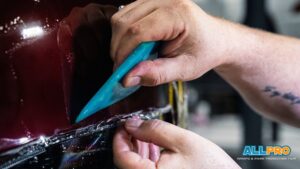
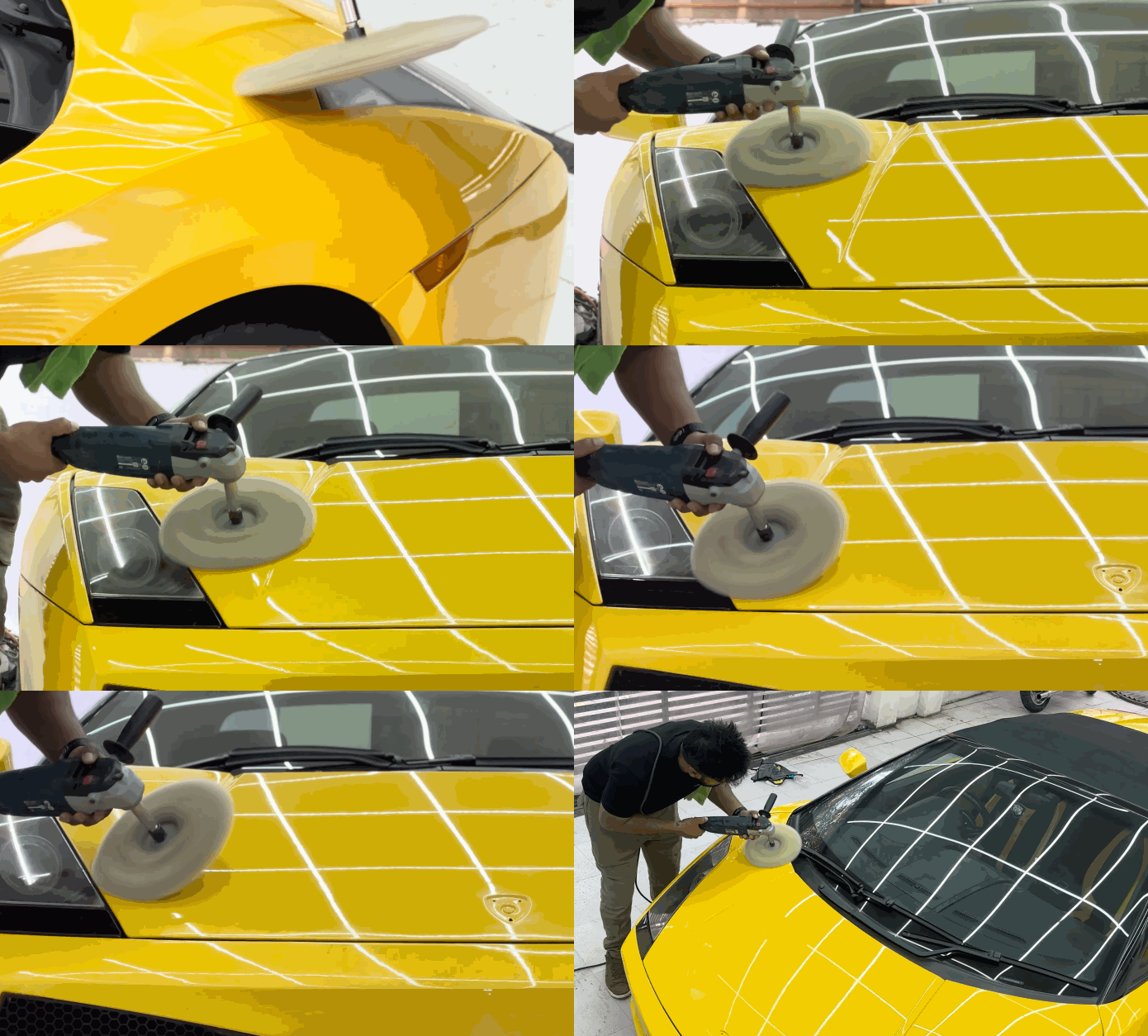 Polishing paint to achieve a high gloss finish during.
Repainted and previously repaired panels can often be wrapped successfully, but the quality, condition, and age of that work matter significantly. A professionally refinished panel with properly bonded and fully cured paint presents a very different situation from fresh paint, failing touch-up work, or a poorly prepared repair.
This is why we want to know about a vehicle’s history before wrapping whenever possible. Previous collision repairs, body filler, repainted panels, spot repairs, and touch-up paint can influence how we approach the installation. They don’t automatically mean the vehicle is unsuitable.
Fresh refinishing deserves particular attention. Paint and repair products need sufficient curing time before film is applied, and that timeline can vary according to the refinishing system and repair shop’s recommendations. Installing vinyl prematurely isn’t a shortcut worth taking.
Removal is another consideration. Factory paint in good condition generally provides a more predictable foundation, while compromised or improperly bonded refinished paint may have a greater risk of lifting when vinyl is eventually removed.
Our vinyl wrapping services therefore begin with understanding what we’re actually wrapping. Previous bodywork isn’t necessarily a dealbreaker, but hiding it from the installer removes information that can be important for both installation and future removal.
Why Raleigh’s Climate Matters When Wrapping a Previously Damaged Car
Raleigh’s heat, humidity, UV exposure, heavy pollen seasons, and frequent outdoor parking can make existing surface problems more important to resolve before wrapping. Environmental exposure won’t necessarily cause a properly prepared vehicle to have problems, but it can be less forgiving of weaknesses that were already present.
A vehicle that spends weekdays commuting on I-40 or I-440 and then sits outdoors for hours has a different exposure pattern from one stored primarily in a garage. Around Raleigh and Wake County, strong sunlight and summer heat can repeatedly warm exterior panels, while humidity and rainfall add moisture to the environment.
Pollen is another familiar issue. During Raleigh’s heavier pollen periods, contamination can accumulate quickly around trim, panel gaps, and other tight areas. Vehicles regularly traveling Capital Boulevard or through construction-heavy parts of the area can also pick up road film and airborne debris that need to be removed during preparation.
Existing corrosion, failing clear coat, or poorly bonded repairs deserve more attention under those conditions because the vinyl doesn’t correct the weakness underneath.
At AllPro Wraps, local conditions are part of how we think about preparation and material selection. A vinyl wrap expected to stay on a Raleigh vehicle through multiple North Carolina seasons deserves a stable foundation from day one, followed by appropriate washing and maintenance throughout its service life.
When Should You Repair the Car Instead of Wrapping It?
Repair should come first when existing damage compromises paint stability, panel shape, corrosion resistance, or the surface required for reliable vinyl adhesion. In those cases, installing film immediately may produce a weaker result while leaving the actual vehicle problem unresolved.
Not every scratch or chip requires a trip to a body shop. Minor cosmetic imperfections on otherwise stable paint may be acceptable depending on their depth, location, and the owner’s expectations for the finished appearance. Significant dents, active rust, peeling clear coat, loose paint, and questionable previous repairs are different because they affect either the surface itself or the material supporting the wrap.
Sometimes the best recommendation we can give an owner is to postpone the wrap. That may not be the answer someone hoping for an immediate color change wants to hear, but correcting a genuine surface problem first can prevent paying for an installation that needs to be revisited prematurely.
Professional vinyl wrapping services work best when they’re used to transform a suitable vehicle surface, not to conceal bodywork that still needs attention. Repairing what genuinely needs repair gives the wrap a better foundation and gives the owner a finished result that more closely matches the reason they wanted the vehicle wrapped in the first place.