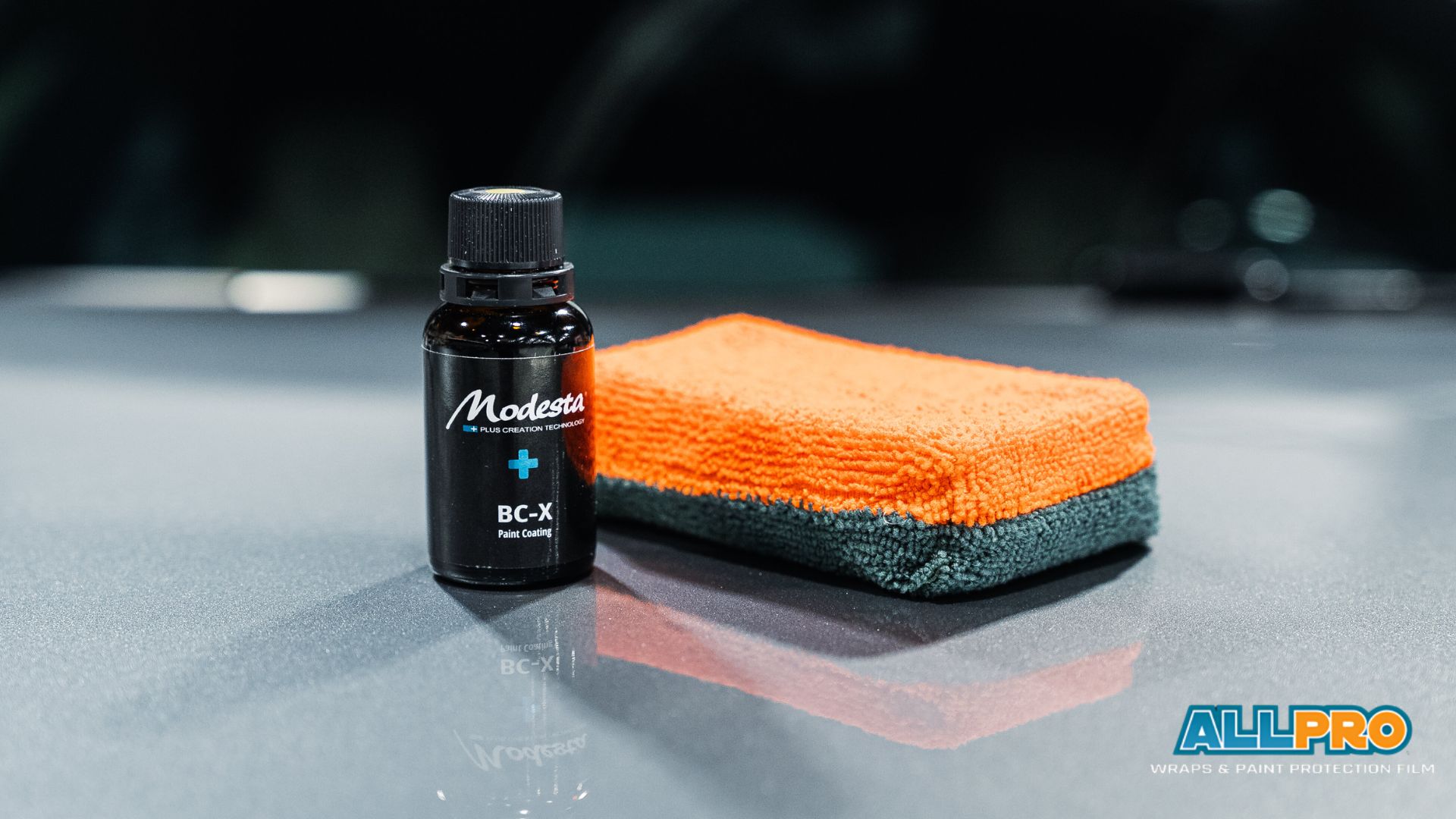
Professional ceramic coating can last several years in Raleigh, but there is no single lifespan that applies to every vehicle. Product quality, paint preparation, installation, mileage, parking conditions, washing habits, and exposure to North Carolina weather all influence how long the coating continues performing as intended.
For Raleigh drivers, climate matters because a vehicle can experience intense summer sun, humidity, frequent rain, heavy spring pollen, and considerable temperature changes throughout the year. A garage-kept weekend vehicle and a daily driver parked outside near downtown Raleigh shouldn’t be expected to age identically, even when both receive the same coating.
At AllPro Wraps, we prefer looking at ceramic coating longevity in terms of the complete vehicle and how it is actually used. A professionally prepared and coated car that receives appropriate maintenance has a much better foundation for long-term performance than one treated without considering paint condition or ownership habits.
What Determines How Long Ceramic Coating Lasts?
The lifespan of a ceramic coating depends on more than the number of years printed on a product label. The coating itself matters, but preparation, application, environmental exposure, and maintenance ultimately work together to determine its real-world durability.
Several factors have an especially important influence:
- Coating quality: Different ceramic coating formulations offer different levels of durability, chemical resistance, and environmental performance.
- Paint preparation: Contamination, oxidation, or paint defects left untreated can prevent the surface from being properly prepared for coating.
- Installation quality: Consistent application and appropriate curing conditions are fundamental to professional results.
- Vehicle storage: A garage-kept vehicle generally experiences less environmental stress than one parked outdoors every day.
- Annual mileage: More driving means more exposure to road grime, insects, rain, contamination, and repeated washing.
- Maintenance habits: Proper washing and timely contaminant removal help maintain the coating’s surface behavior.
This is why advertised longevity should be treated as a reference rather than an automatic expiration date. Two Raleigh vehicles receiving the same product can perform differently after several years because their daily lives are completely different.
Professional ceramic coating should therefore begin with understanding the paint, the product, and the owner’s expectations. Longevity starts before the coating ever touches the vehicle.
How Does Raleigh’s Climate Affect Ceramic Coating?
Raleigh’s climate places a ceramic-coated vehicle under several types of environmental stress throughout the year. Strong UV exposure, summer heat, humidity, rain, pollen, and airborne contamination can all influence how the coated surface looks and behaves over time.
Summer Heat and UV Exposure
Vehicles parked outdoors around Raleigh and Wake County can spend long periods exposed to direct sunlight. UV radiation and heat contribute to the environmental stress placed on automotive finishes, particularly on horizontal surfaces such as the hood, roof, and trunk.
A ceramic coating creates a durable layer over the clear coat that can improve resistance to environmental contamination and make ongoing care easier. It should not, however, be treated as a reason to neglect the vehicle simply because the paint has been coated.
Rain and Humidity
North Carolina’s humid conditions introduce another challenge. Rainwater that dries naturally on the surface can leave mineral deposits and water spots, particularly when a vehicle repeatedly sits outside after storms.
Hydrophobic behavior helps water move away from coated paint more readily, but hydrophobic does not mean water-spot-proof. Allowing mineral-rich water to repeatedly dry on the vehicle can still leave deposits that require attention.
A Raleigh daily driver traveling I-40 or I-440 every week will naturally encounter more environmental exposure than a low-mileage car stored indoors. At AllPro Wraps, that difference matters when we discuss realistic coating expectations with an owner rather than relying exclusively on a manufacturer’s maximum durability claim.
Does Raleigh’s Pollen Season Shorten Ceramic Coating Life?
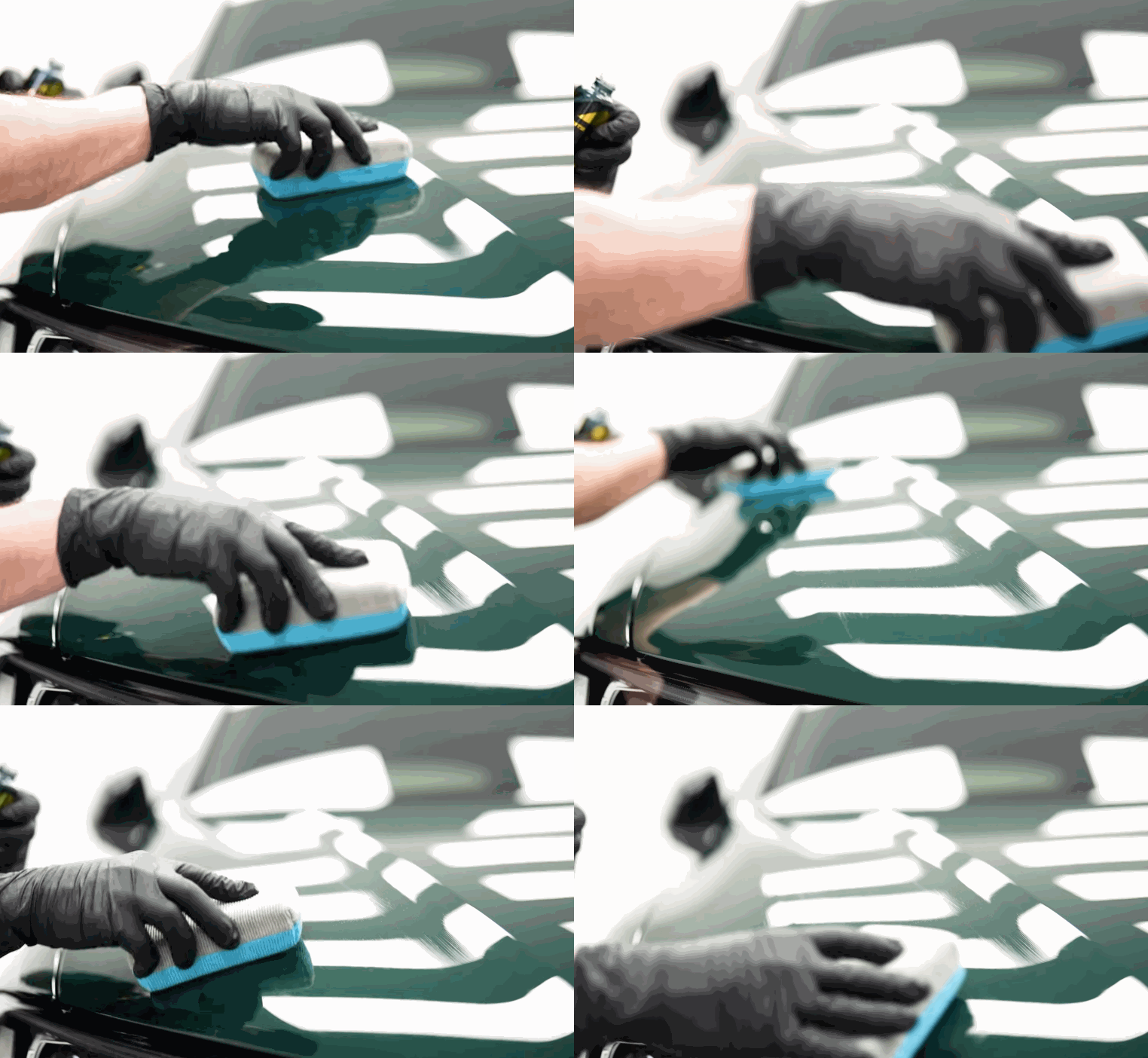 Ceramic coating is applied evenly across the paint to create a smooth glossy finish and lasting surface protection.
Pollen itself doesn’t automatically ruin a ceramic coating, but allowing heavy contamination to remain on the vehicle for extended periods can work against proper coating maintenance. Raleigh’s spring pollen season makes regular cleaning particularly important because accumulation can happen surprisingly quickly.
Anyone who has kept a dark-colored car outside during a North Carolina spring knows how dramatically the surface can change in a matter of days. That familiar yellow-green layer doesn’t mean the coating has stopped working.
In fact, one practical advantage of a coated vehicle is that contaminants are generally easier to remove from a well-maintained surface. The mistake is assuming that easier cleaning means cleaning is no longer necessary.
Aggressively wiping dry pollen from the paint is also something we avoid. Loose contamination should be removed using appropriate washing techniques rather than being rubbed across the surface. Ceramic coating maintenance is partly about protecting the coating, but it’s also about reducing unnecessary contact with the finish underneath.
For Raleigh owners dealing with recurring pollen, frequent but gentle care is preferable to letting contamination build for weeks and then trying to remove everything aggressively at once.
Does a Daily Driver’s Ceramic Coating Wear Faster?
A daily driver’s coating can experience more wear than the same product installed on a garage-kept weekend vehicle because mileage increases exposure to contamination, weather, washing, and road conditions. That doesn’t mean ceramic coating durability is poor on daily drivers. It means usage should be part of the lifespan expectation.
Consider a vehicle commuting regularly through Raleigh on Capital Boulevard, I-440, or I-40. During a normal week, its exterior may encounter road grime, insects, rainwater, construction dust, pollen, and hours of direct sun while parked. Every additional wash required to remove that contamination also introduces physical contact with the coated surface.
A garage-kept vehicle driven occasionally experiences a completely different cycle. It may receive the same professional coating but accumulate environmental exposure much more slowly.
For that reason, we wouldn’t tell both owners to expect identical performance simply because the product is identical. Ceramic coating application provides the starting point. How the vehicle is driven, stored, washed, and maintained determines much of what happens afterward.
How Does Outdoor Parking Affect Ceramic Coating Longevity?
Regular outdoor parking can accelerate the environmental exposure a ceramic coating receives, especially in Raleigh, where strong sun, humidity, pollen, rain, tree sap, and bird droppings can all become part of everyday vehicle ownership. The coating can still provide years of performance, but how quickly it ages depends heavily on how those contaminants are managed.
Parking location makes a noticeable difference. A car left beneath trees may escape some direct sunlight but encounter more sap, pollen, leaves, and bird droppings. An uncovered parking lot can mean greater UV and heat exposure throughout the day. Neither situation automatically defeats a quality coating, but both increase the importance of routine care.
Contaminants such as bird droppings and tree sap deserve prompt attention rather than waiting until the next scheduled wash. A coating adds chemical resistance and creates a more manageable surface, but it isn’t an impenetrable barrier against everything that lands on the vehicle.
This is why at AllPro Wraps, we consider storage conditions when discussing realistic coating longevity. Someone parking outdoors every day may need a more attentive maintenance routine than an owner whose vehicle spends most nights and workdays inside.
Can Proper Maintenance Make Ceramic Coating Last Longer?
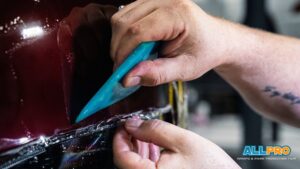
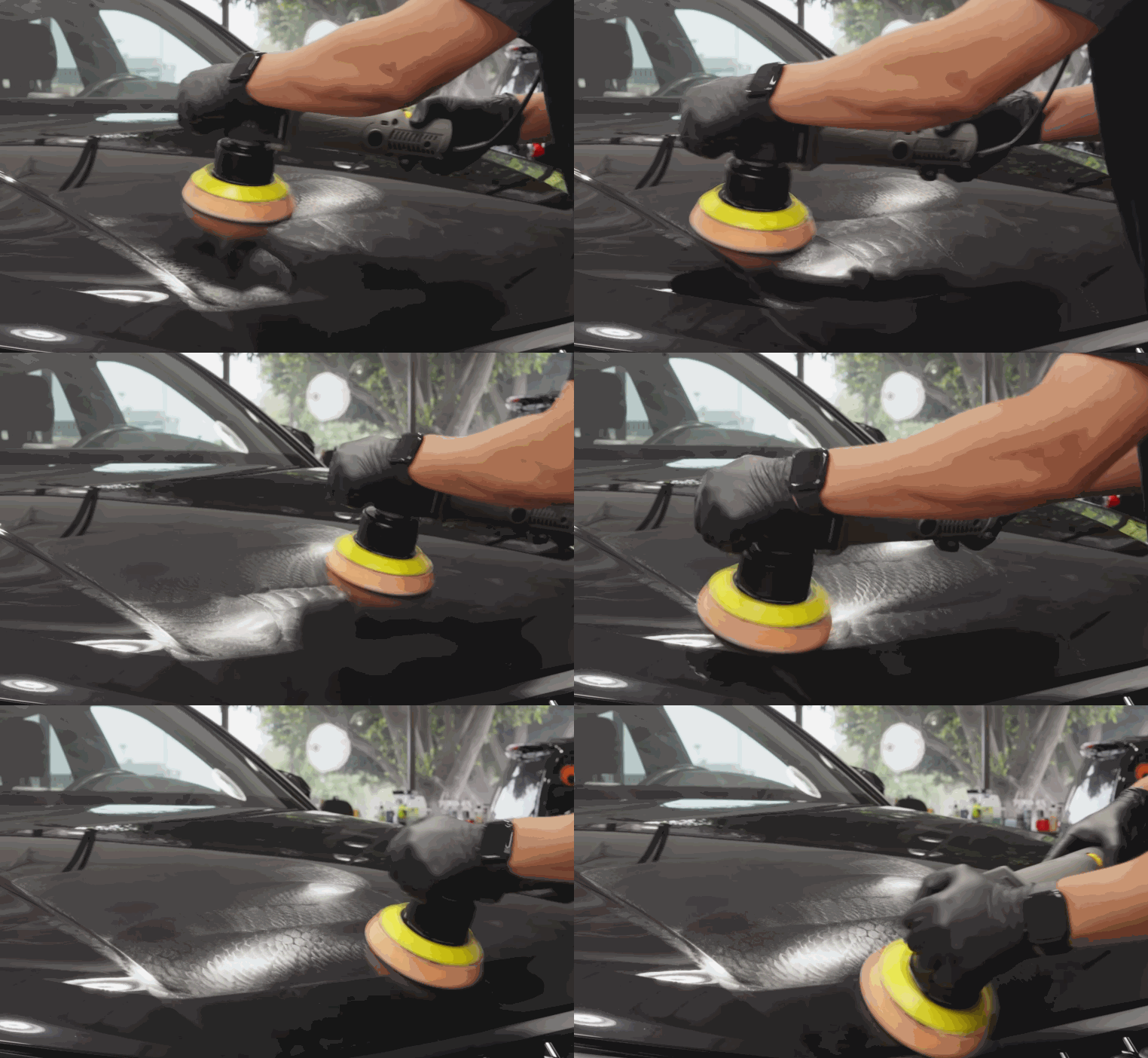 Paint correction and polishing help prepare the surface so ceramic coating can bond properly and deliver a cleaner finish.
Proper maintenance can help a ceramic coating retain its hydrophobic behavior, appearance, and contaminant resistance for longer. The objective isn’t complicated: clean the vehicle regularly without using techniques or chemicals that unnecessarily degrade the coated surface.
A practical maintenance routine includes:
- Wash the vehicle regularly rather than allowing heavy contamination to accumulate.
- Use pH-appropriate automotive cleaning products suitable for coated vehicles.
- Avoid abrasive brushes and automatic washes that rely on aggressive physical contact.
- Dry the vehicle properly to reduce persistent water spotting.
- Remove bird droppings, insects, sap, and similar contaminants promptly.
- Have the coating professionally inspected when its behavior changes noticeably.
One common mistake is assuming reduced water beading automatically means the coating has completely failed. Mineral deposits, road film, and embedded contamination can mask hydrophobic properties even while coating remains on the paint.
Periodic decontamination may restore some of that behavior. Proper ceramic coating maintenance therefore involves recognizing the difference between a dirty or clogged surface and a coating that has genuinely reached the end of its useful service life.
How Can You Tell When Ceramic Coating Is Wearing Out?
A ceramic coating may be approaching the end of its effective service life when its surface behavior deteriorates consistently even after proper washing and decontamination. Changes normally happen gradually rather than on one specific expiration date.
Water Behavior Changes
Reduced beading or sheeting can be one sign, but it shouldn’t be judged in isolation. Contamination can temporarily alter water behavior, so the surface should first be thoroughly cleaned before assuming the coating has failed.
Cleaning Becomes More Difficult
One of the practical benefits of professional ceramic coating application is easier ongoing cleaning. When road grime and contaminants begin bonding more stubbornly despite appropriate maintenance, the coating may need to be evaluated.
Performance Becomes Uneven
Horizontal panels can experience different environmental exposure than vertical surfaces. A hood or roof may begin behaving differently from the doors, particularly on vehicles parked outside frequently.
These changes don’t automatically mean another coating should be applied immediately. Professional inspection can help determine whether the surface needs decontamination, maintenance, or eventual reapplication rather than relying on water beading alone.
Is Ceramic Coating Worth It for Raleigh Daily Drivers?
Ceramic coating can be particularly useful for Raleigh daily drivers that owners want to keep looking well maintained without making routine exterior care unnecessarily difficult. Its value comes from improved surface properties and resistance to environmental contamination, not from eliminating washing or making paint impossible to damage.
That distinction matters. Ceramic coating doesn’t stop rock chips from highway driving, and it shouldn’t be confused with paint protection film. It also won’t prevent every scratch or water spot. What it can do is create a durable layer over the clear coat that makes common contamination easier to manage while providing additional resistance to chemicals and environmental exposure.
For someone regularly commuting around Wake County, parking outdoors, or dealing with Raleigh’s pollen every spring, those benefits can make vehicle maintenance considerably more manageable.
The investment makes the most sense when the owner is prepared to maintain the vehicle afterward. A professionally installed coating paired with sensible washing habits offers far greater long-term value than an expensive coating that is subsequently neglected.
How Long Should You Expect Your Ceramic Coating to Last in Raleigh?
There isn’t one universal number that accurately predicts ceramic coating lifespan for every Raleigh vehicle. Professional coatings are available with durability expectations ranging from a few years to considerably longer, but real-world longevity ultimately depends on the coating system, preparation, installation, driving habits, storage, and maintenance.
A daily driver parked outside shouldn’t automatically be compared with a garage-kept enthusiast vehicle. Likewise, a coating receiving careful hand washes and periodic maintenance can age differently from one subjected repeatedly to harsh automatic washes and neglected contamination.
At AllPro Wraps, we prefer setting expectations around the actual vehicle and how the owner uses it. Raleigh’s climate doesn’t make long-lasting ceramic protection unrealistic. It simply makes proper product selection, paint preparation, installation, and aftercare especially important.