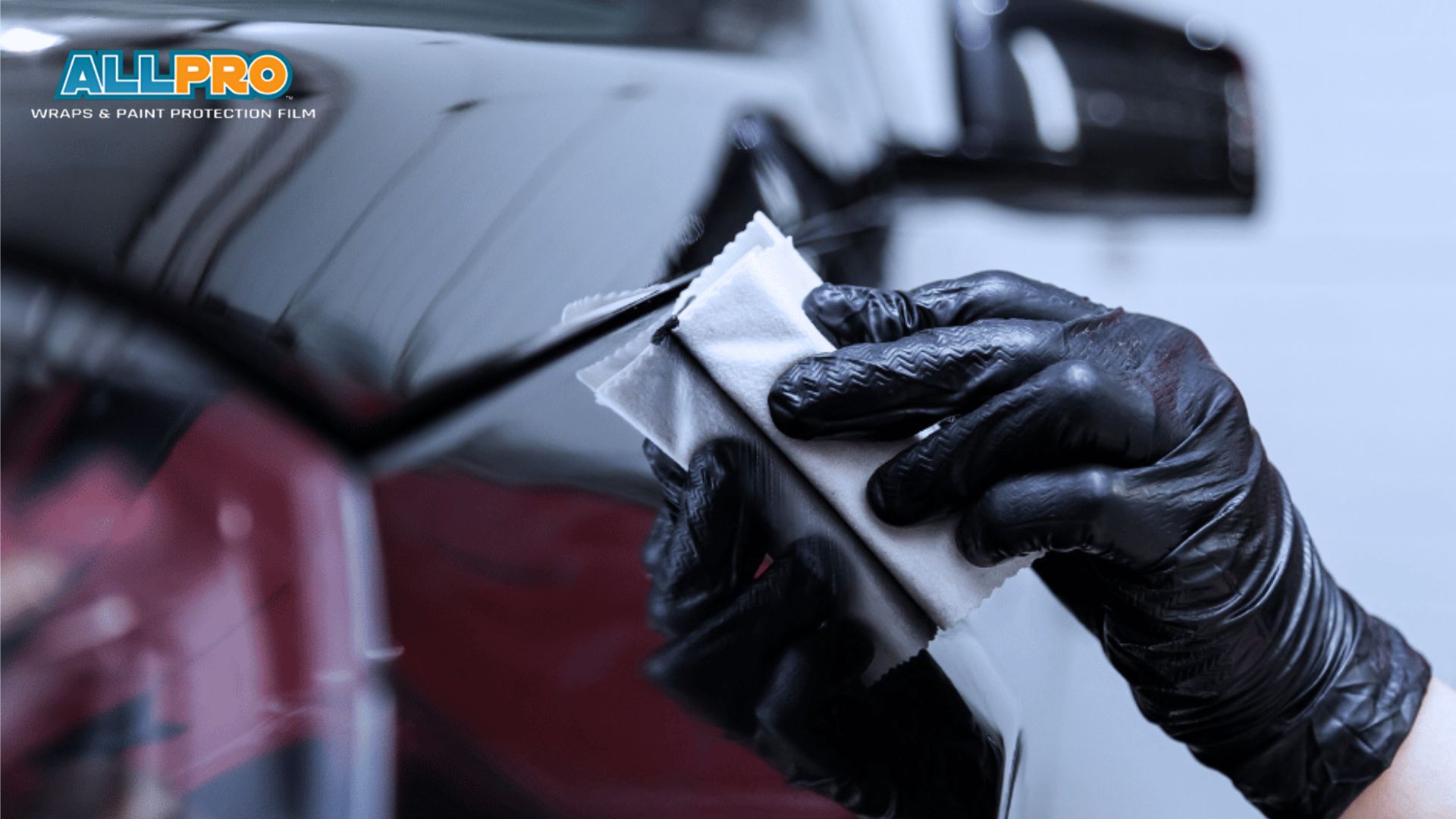
Every spring, Raleigh vehicles go through the same cycle. One day the paint looks clean, and the next morning there’s already a yellow-green layer covering the hood, windshield, and roof. Areas with heavier tree coverage, especially around neighborhoods near Cary, North Hills, and commuter routes heading through Wake County, tend to experience it even more intensely.
The problem is not just the pollen itself, it’s what happens when it combines with humidity and rising temperatures. Once moisture gets involved, that dry layer starts sticking to the paint more aggressively, settling into surfaces and becoming harder to remove safely.
That’s where ceramic coating starts making a real difference. From what we’ve seen working on vehicles throughout Raleigh, the goal is not to stop pollen from landing on the car entirely, because nothing realistically can. The advantage comes from reducing how much contamination bonds to the surface and how difficult it becomes to clean later.
At AllPro Wraps, we look at pollen season as one of the clearest examples of why long-term paint protection matters here. Raleigh’s environment creates constant exposure, and vehicles without protection usually show that wear much faster over time.
What Ceramic Coating Actually Does During Pollen Season
There’s a common assumption that ceramic coating is mainly about making a car shinier. While appearance is part of it, the real value during pollen season comes from how the coating changes the behavior of the surface itself.
A coating creates a hardened, protective layer over the paint that resists contamination more effectively than untreated surfaces. This type of paint protection coating doesn’t prevent pollen from touching the vehicle, but it makes it much harder for that buildup to cling aggressively to the paint.
Why that matters during Raleigh pollen season
- Hydrophobic properties help moisture and contaminants slide off more easily
- Pollen buildup becomes less stubborn during washing
- Surface slickness reduces friction during cleaning
- Paint is less exposed to contamination bonding directly into the clear coat
That hydrophobic effect is one of the biggest reasons drivers notice a difference. A properly installed hydrophobic coating helps water carry away contaminants instead of letting them sit and dry into the surface.
For daily drivers, this type of ceramic protection for cars becomes especially useful during weeks when pollen levels are constantly high and washing frequency naturally increases.
Why Raleigh’s Environment Makes Pollen More Aggressive
Pollen season feels different in Raleigh compared to a lot of other areas because the conditions here amplify how contaminants behave on vehicle surfaces. Warm temperatures arrive quickly, humidity stays present, and the amount of tree coverage across the region creates continuous exposure.
Communities around Cary, Wake Forest, and many suburban neighborhoods are especially known for heavy pollen accumulation during spring. Cars parked outdoors in these areas often collect visible buildup within hours, even after being freshly cleaned.
Morning moisture makes things worse. When pollen mixes with dew or light rain, it creates a layer that sticks much more firmly to the paint. Instead of sitting loosely on the surface, it starts bonding into small imperfections and becomes more difficult to remove without friction.
At AllPro Wraps, we see this pattern every year. It’s one of the main reasons Raleigh drivers benefit from proactive paint protection rather than waiting until contamination becomes visible damage. Local conditions simply create more opportunities for buildup to affect the finish over time.
Common Problems Pollen Creates for Unprotected Paint
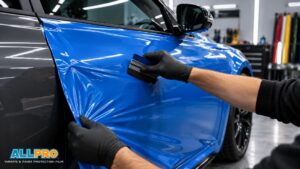
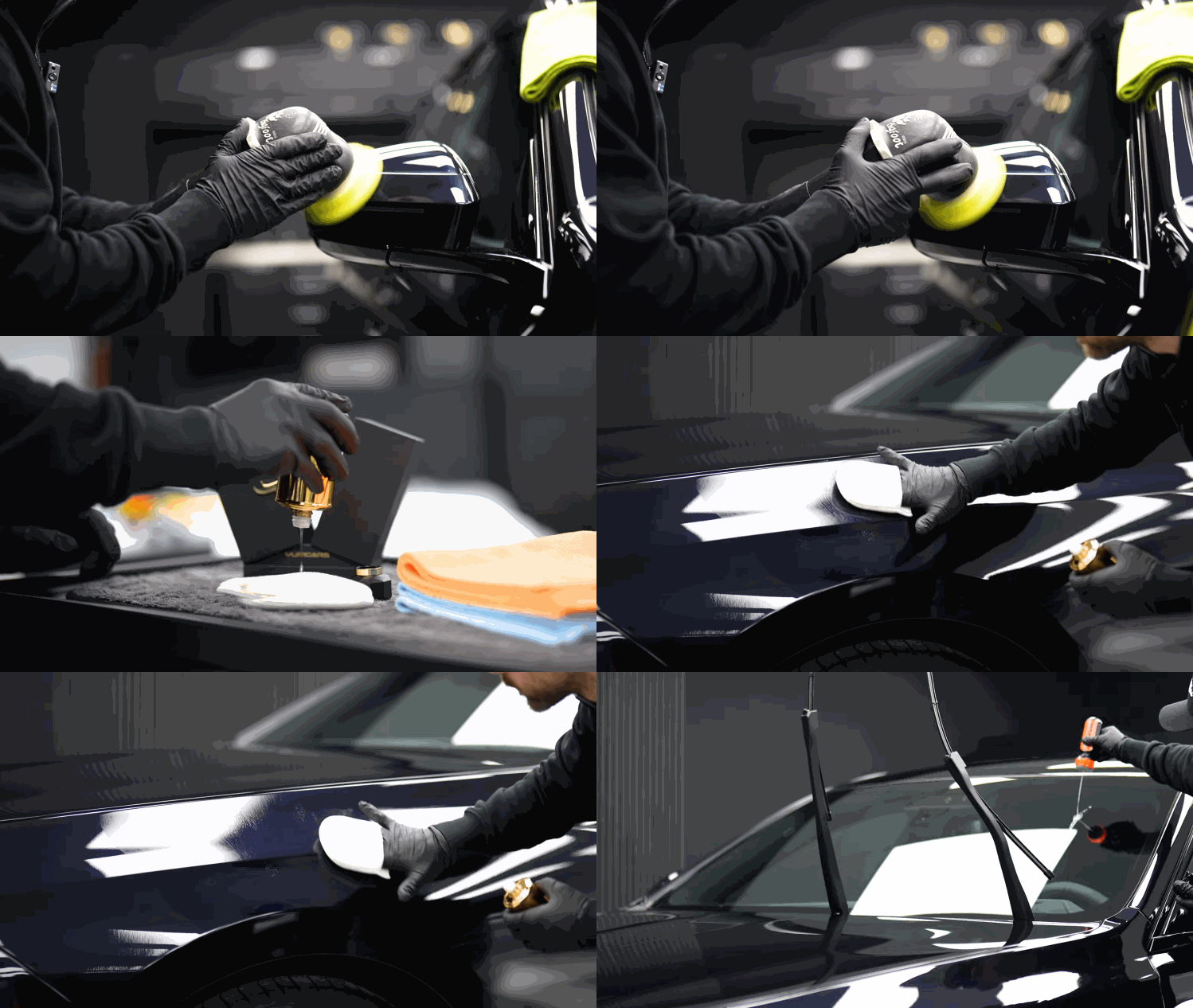 Every detail shines brighter with expert ceramic coating application.
A lot of drivers think pollen is mostly an appearance issue, but over time, it creates much bigger problems for unprotected paint surfaces, especially during Raleigh’s longer spring seasons.
- Pollen settling into microscopic imperfections and pores within the paint surface
- Increased risk of staining once pollen combines with humidity or rainwater
- Loss of gloss and slickness caused by constant layers of contamination buildup
- Greater chance of swirl marks from wiping or washing the surface improperly
This kind of paint contamination tends to build gradually, which is why many drivers do not notice the impact immediately. The longer the buildup sits, the more likely it becomes that pollen damage car paint issues begin showing up in the form of dullness, rough texture, or visible surface wear.
Proper vehicle surface protection helps reduce how aggressively these contaminants interact with the paint in the first place.
How Ceramic Coating Changes the Cleaning Process
One of the biggest differences drivers notice after a ceramic coating application is not necessarily how the car looks, it’s how much easier it becomes to maintain during pollen season.
Without protection, pollen tends to grip the surface tightly, which usually leads to more scrubbing, more friction, and more opportunities to create micro-scratches while washing. A coated surface behaves differently. Contaminants release more easily, meaning the cleaning process becomes less aggressive overall.
What changes with a ceramic-coated vehicle
- Washing requires less pressure and friction on the paint
- Water helps lift pollen and debris away more efficiently
- Drying becomes easier with reduced residue left behind
- Frequent cleaning causes less stress on the clear coat over time
That’s a major advantage for ceramic-coated car cleaning during Raleigh spring months, especially when vehicles need to be washed more often than usual.
Over time, this also contributes to easier car maintenance overall. The coating helps maintain surface condition while reducing the amount of correction work needed later, which is one of the reasons many drivers see ceramic coatings as a practical form of vehicle paint protection, not just a cosmetic upgrade.
Is Ceramic Coating Application Worth It in Raleigh?
That question usually depends less on the vehicle itself and more on the way it’s used. Around Raleigh, two cars can experience completely different levels of exposure even within the same week. A vehicle parked in a shaded garage most of the time is dealing with something very different than one sitting outside all day near office complexes, apartment lots, or commuter stations.
Long commutes also change the equation. The more time spent driving through pollen-heavy corridors, construction areas, and humid conditions, the faster contamination builds across the paint. That constant exposure is where many of the real-world ceramic coating benefits start becoming noticeable.
Where ceramic coatings tend to make the biggest difference
- Vehicles parked outdoors year-round
- Daily commuters driving through Raleigh traffic consistently
- Cars exposed to heavy tree coverage during spring
- Drivers wanting easier maintenance between washes
What makes a professional ceramic coating application Raleigh NC drivers can rely on valuable is not that it makes the vehicle “perfect,” but that it reduces how aggressively the environment affects the paint over time.
At AllPro Wraps, we usually frame ceramic protection as a maintenance advantage more than anything else. Less friction during washing, less contamination bonding to the surface, and better long-term paint preservation all become much more relevant when your vehicle deals with Raleigh conditions every single day.
Mistakes Drivers Make During Pollen Season
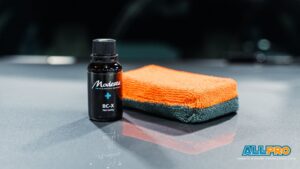
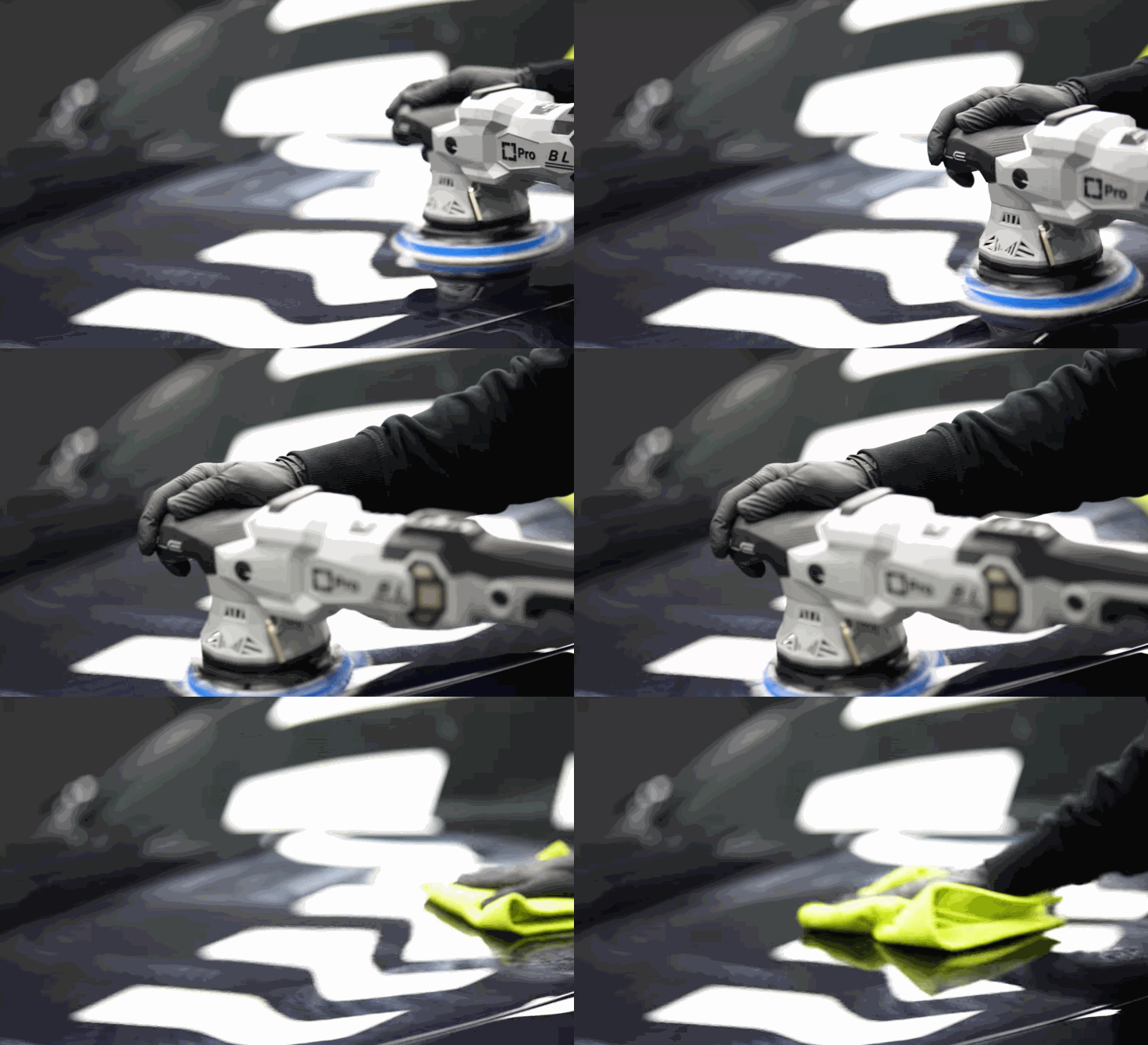 Unlock deep gloss and lasting ceramic coating protection today.
Pollen season causes a surprising amount of accidental paint damage, mostly because people try to remove buildup as quickly as possible without realizing how abrasive the surface already is.
- Wiping dry pollen directly off the paint: Without lubrication, pollen acts like fine debris across the surface and increases the chance of scratching
- Waiting too long between washes: Heavy buildup becomes harder to remove safely once moisture and heat bake contaminants into the paint
- Using rough towels or aggressive automatic washes: Poor washing methods create swirl marks much faster during peak pollen weeks
- Assuming ceramic coatings eliminate maintenance completely: Even protected vehicles still require proper ceramic coating maintenance to perform correctly
A lot of this comes down to using proper paint-safe cleaning methods rather than reacting out of frustration when the car turns yellow overnight. Safe washing techniques matter much more during Raleigh spring conditions because surfaces are already under constant contamination pressure.
The goal with safe car washing is reducing friction as much as possible while removing buildup before it hardens into the paint.
Building a Better Maintenance Routine for Ceramic-Coated Vehicles
One of the biggest misconceptions about coatings is that once the vehicle is protected, maintenance becomes unnecessary. In reality, the opposite is true. Proper care is what allows a coating to keep performing consistently over the long term.
The difference is that maintenance becomes easier and more controlled.
A healthier routine for coated vehicles usually includes
- Frequent but gentler washes during heavy pollen periods
- Regular inspections to identify buildup or water spotting early
- Proper drying techniques to reduce mineral residue
- Periodic maintenance treatments to support coating performance
This approach helps maximize both appearance and durability. Good ceramic coating care is less about constantly correcting problems and more about preventing stress from accumulating on the surface in the first place.
At AllPro Wraps, we usually recommend adjusting maintenance routines seasonally because Raleigh conditions shift so much throughout the year. A strategy that works in winter often needs to change completely once pollen season arrives.
That flexibility is what supports real long-term paint protection, especially for vehicles exposed to daily commuting and outdoor parking.
Long-Term Benefits Beyond Just a Cleaner Appearance
The visual side of ceramic coatings gets most of the attention early on, but the long-term advantages usually become more obvious months later, especially after going through multiple Raleigh seasons.
A coated surface tends to maintain its gloss more consistently because contaminants have a harder time bonding directly to the paint. That reduction in buildup changes the overall condition of the vehicle gradually rather than dramatically.
There’s also a noticeable shift in maintenance effort. Summer dust, spring pollen, and rain residue generally release more easily from protected surfaces, which means less aggressive cleaning over time.
That matters because repeated correction work slowly wears down the clear coat. The less polishing and heavy decontamination a vehicle needs, the better the original finish tends to age.
For daily drivers especially, the value compounds through repeated exposure. Vehicles dealing with Raleigh traffic, outdoor parking, and year-round environmental contamination usually show the difference between protected and unprotected paint much more clearly after extended use.