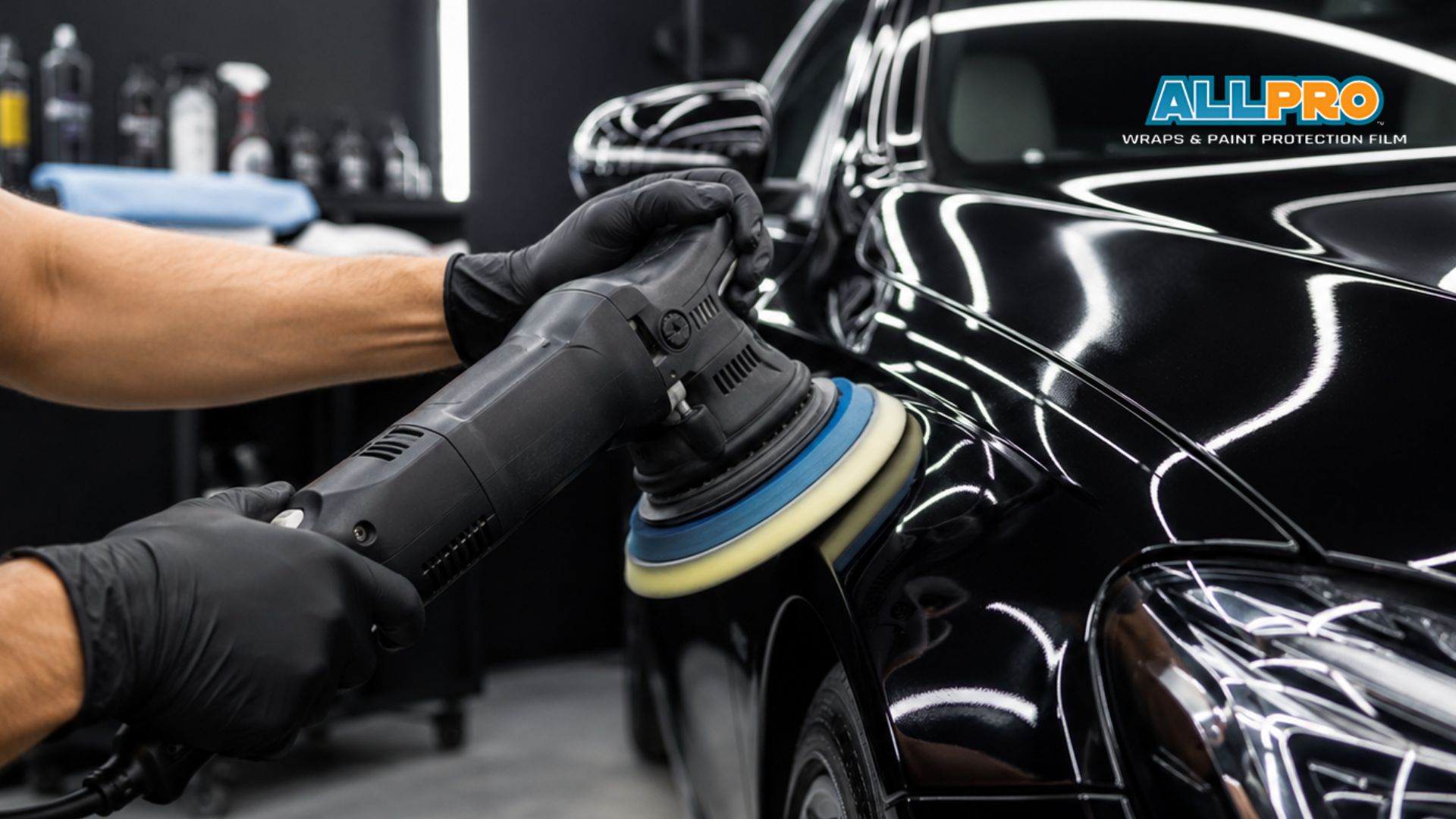
Raleigh drivers deal with a unique combination of conditions that slowly affect vehicles throughout the year. Spring brings layers of pollen, summer introduces heat and humidity, and daily commuting adds road dust and airborne contaminants that settle onto every surface. None of these factors are particularly dramatic on their own, but together they create a steady cycle of wear that many vehicle owners underestimate.
What makes detailing tricky is that most issues develop gradually. Paint contamination doesn’t suddenly appear overnight, and interiors rarely go from clean to neglected in a week. Instead, buildup accumulates little by little until the vehicle no longer looks or feels the way it once did.
That’s one reason we view car detailing as preventive maintenance rather than a cosmetic service. From our perspective at AllPro Wraps, detailing is often about addressing small issues before they become larger ones. The earlier contamination is identified and removed, the easier it is to maintain the condition of the vehicle over time.
Why Waiting Until a Car Looks Dirty Can Be Misleading
Appearance only tells part of the story. Many vehicles that look reasonably clean from a distance are already carrying contamination that has bonded to surfaces and started affecting the finish.
Paint, trim, glass, wheels, and even interior materials collect more than visible dirt. Pollen, brake dust, industrial fallout, oils, and airborne particles can settle onto the vehicle and remain there long after a quick wash removes the obvious debris.
Surface dirt and embedded contamination are not the same thing
- Surface dirt sits on top of the vehicle and is usually removed during routine washing
- Embedded contamination bonds to materials and often requires specialized cleaning methods
- Hidden buildup can affect gloss, texture, and long-term surface condition
- Professional inspections often reveal issues that are not immediately visible
This is one of the reasons vehicle detailing services go beyond simple cleaning. A proper professional auto detailing process focuses on what has accumulated beneath the surface as much as what can be seen from the outside.
Whether we’re talking about paint, glass, or exterior detailing, the goal is to restore and preserve rather than simply remove visible dirt.
Sign #1: Your Paint No Longer Feels Smooth
One of the easiest ways to evaluate the condition of your vehicle is with your hand rather than your eyes. A surface can look clean and glossy while still holding a surprising amount of contamination.
Road debris, pollen, industrial fallout, and environmental particles gradually bond to the paint. Over time, those contaminants create a rough texture that washing alone often cannot remove. Many drivers first notice it when running their hand lightly across the hood or roof after the vehicle has been cleaned.
What rough paint usually indicates
- Embedded contamination that has bonded to the surface
- Environmental fallout accumulating over time
- Pollen and road residue trapped in the paint’s outer layer
- The need for professional decontamination rather than additional washing
At AllPro Wraps, this is one of the most common signs we encounter during vehicle evaluations. The paint may appear relatively clean, but the texture tells a completely different story.
When a vehicle reaches this stage, professional car detailing often focuses on removing those bonded contaminants safely before they begin affecting the finish more significantly.
Sign #2: Water Stops Behaving the Way It Used To
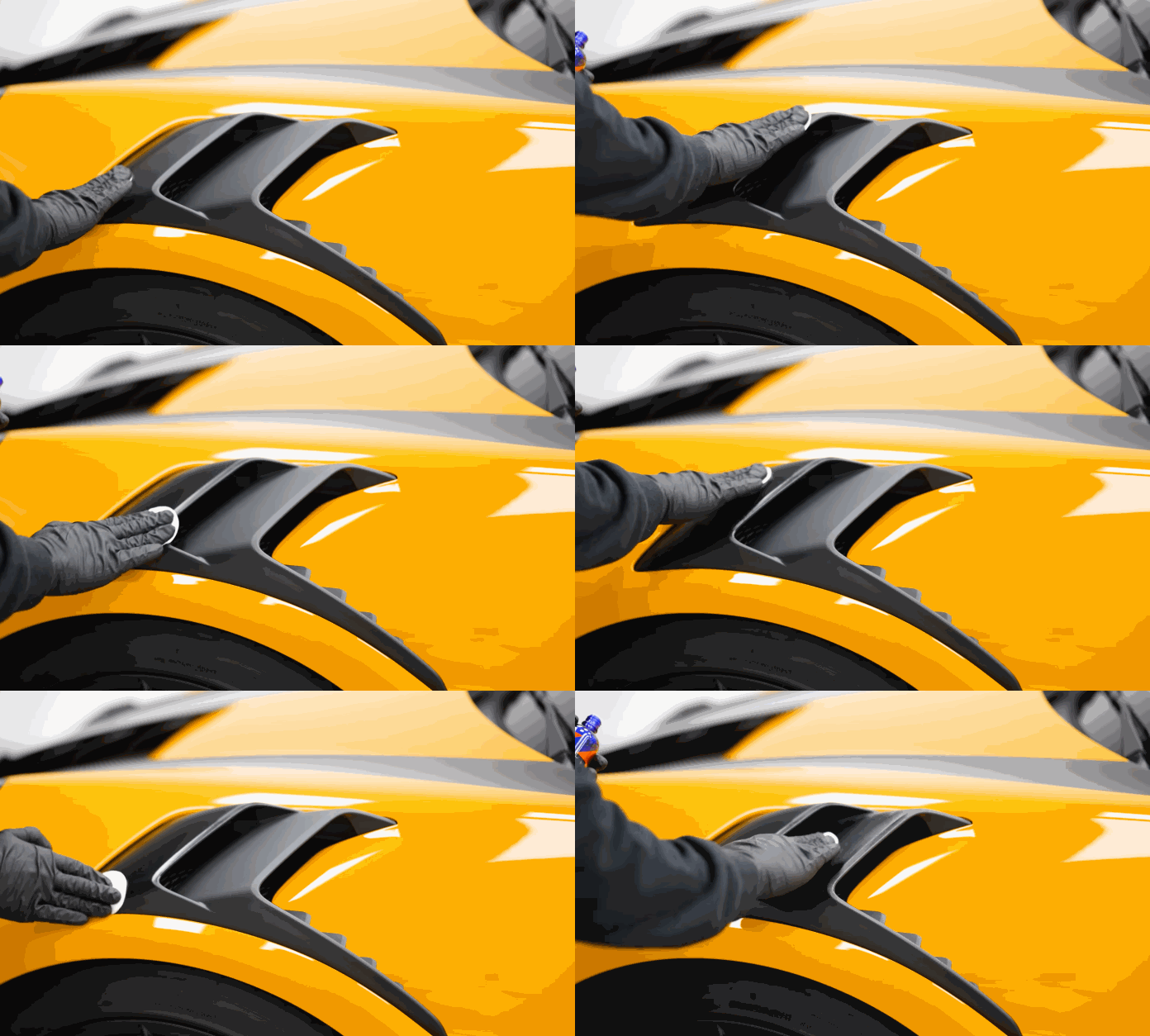 Make every detail shine with premium car detailing.
Water can reveal a lot about the condition of a vehicle’s surfaces. When paint is clean and properly maintained, water typically sheets away efficiently or forms consistent beads that move easily across the surface.
When contamination begins building up, those characteristics start changing. Water may sit flat on the paint, collect in uneven patches, or leave behind more residue after drying.
A change in water behavior often signals
- Reduced surface performance: Contamination creates a barrier between the paint and any existing protection.
- Uneven water movement: Pooling and inconsistent runoff usually indicate buildup across the surface.
- More difficult maintenance: The longer contaminants remain, the harder they become to remove.
- Declining protection levels: Even previously protected surfaces can struggle when contamination accumulates.
Changes like these don’t necessarily mean something is wrong with the paint itself. More often, they indicate that the vehicle would benefit from professional cleaning, decontamination, and renewed protection.
Sign #3: Your Interior Never Quite Feels Clean
A vehicle can have spotless paint and still be overdue for detailing. Interior condition is often a stronger indicator of maintenance needs because it reflects daily use much more directly.
Many of the problems that develop inside a vehicle aren’t obvious at first. Dust settles into areas that are difficult to reach, odors become embedded in fabrics, and residue builds up on surfaces despite regular cleaning efforts.
- Persistent dust on dashboards, consoles, and trim pieces shortly after cleaning
- Lingering odors that return even after air fresheners or routine vacuuming
- Stains that seem to disappear temporarily but remain visible over time
- Buildup inside vents, seams, cupholders, and other difficult-to-clean areas
Professional interior detailing addresses areas that standard cleaning often misses. Deep vehicle interior cleaning focuses on contamination hidden within materials rather than simply improving appearance on the surface.
When the cabin never seems completely fresh no matter how often it’s cleaned, that’s usually a strong indication that more comprehensive interior car care is needed.
Sign #4: Gloss and Color Depth Have Started to Fade
One of the more subtle signs a vehicle needs attention is a gradual loss of visual richness. Most owners don’t notice it immediately because the change happens slowly. Then one day, the paint simply doesn’t look as vibrant as it once did.
In Raleigh, several factors contribute to this process. UV exposure during long summers, seasonal pollen accumulation, humidity, road grime, and airborne contaminants all affect how light reflects from the paint. Even vehicles that receive regular washes can begin looking flat when contamination remains embedded in the surface.
Healthy paint reflects differently
A properly maintained finish tends to have depth, clarity, and sharp reflections. Colors appear richer, and the surface reflects light evenly.
By comparison, neglected paint often looks:
- Dull under direct sunlight
- Less reflective even after washing
- Hazy or muted compared to its original appearance
- Uneven across different panels of the vehicle
The good news is that fading visual appeal doesn’t always mean permanent damage. In many cases, professional car detailing services can remove contamination, restore clarity, and significantly improve overall appearance.
When gloss starts disappearing, it’s often a signal that the vehicle would benefit from attention focused on paint restoration and ongoing vehicle appearance maintenance, not simply another wash.
Sign #5: You’re Spending More Time Cleaning With Less Result
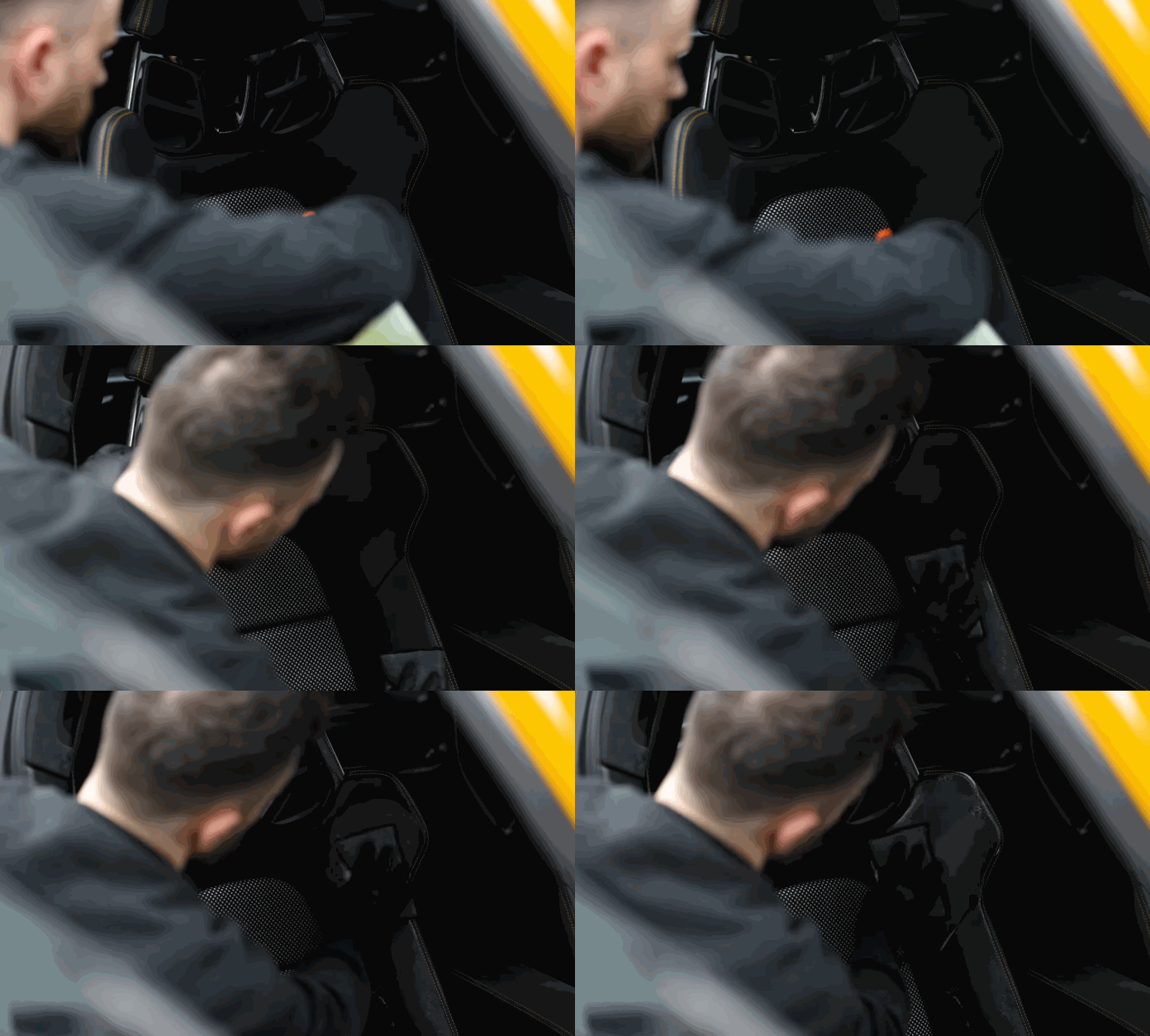 Refresh every surface with thorough interior car detailing.
Sometimes the biggest clue isn’t what the vehicle looks like, it’s how much effort it takes to maintain it.
A common pattern develops when contamination has been allowed to build up for too long. The vehicle gets washed frequently, yet the results seem to last only a few days. Dust returns quickly, surfaces still feel rough, and problem areas never seem completely clean.
What’s happening is that bonded contamination is becoming harder to remove with routine maintenance alone. More washing often doesn’t solve the problem because the underlying issue remains attached to the vehicle.
The frustration cycle many drivers experience
- Wash the vehicle more frequently
- Notice little improvement in paint texture or appearance
- Spend additional time cleaning stubborn areas
- Repeat the process with diminishing results
At AllPro Wraps, we often see vehicles reach this stage before owners realize professional attention would actually save time rather than add another maintenance task.
Professional detailing processes focus on removing the contamination causing the problem in the first place, helping restore surfaces to a condition where routine maintenance becomes easier and more effective again.
What Professional Car Detailing Can Address That Basic Washing Cannot
A standard wash removes loose dirt. Professional detailing focuses on everything that remains after the obvious debris is gone.
That’s the distinction many people don’t realize. Detailing is built around restoration, preservation, and deep cleaning rather than simple appearance improvement. The goal is to address the contaminants and conditions that gradually reduce a vehicle’s overall condition.
Areas where detailing goes beyond routine cleaning
- Paint decontamination: Removes bonded contaminants that washing alone cannot eliminate.
- Deep interior cleaning: Targets embedded dirt, odors, and buildup within carpets, upholstery, and interior surfaces.
- Stain treatment: Addresses spills and discoloration that continue returning after standard cleaning attempts.
- Surface protection: Helps maintain results longer while reducing future contamination buildup.
The tools and techniques used during professional car detailing are specifically designed to treat surfaces safely while delivering a deeper level of correction and preservation.
This is why many drivers searching for car detailing services Raleigh NC discover that detailing solves issues they’ve been trying to manage through repeated washing for months.
Creating a Detailing Schedule Before Problems Become Visible
The easiest contamination to remove is the contamination that hasn’t been allowed to sit for months.
That idea sits at the center of preventive detailing. Rather than waiting for obvious problems to develop, a maintenance schedule keeps surfaces in better condition before they reach the point where correction becomes necessary.
Factors that influence detailing frequency
- Daily commuting mileage
- Outdoor versus covered parking
- Exposure to pollen-heavy areas of Raleigh
- Vehicle usage for work, family transportation, or recreation
Every vehicle experiences different conditions. A commuter traveling I-40 daily will have different maintenance needs than a weekend vehicle stored indoors most of the week.
At AllPro Wraps, we typically encourage drivers to think about detailing as part of their overall maintenance routine. Consistent care is usually simpler, more predictable, and more affordable than addressing months or years of accumulated wear.
That’s one reason routine detailing plays such an important role in long-term vehicle preservation.